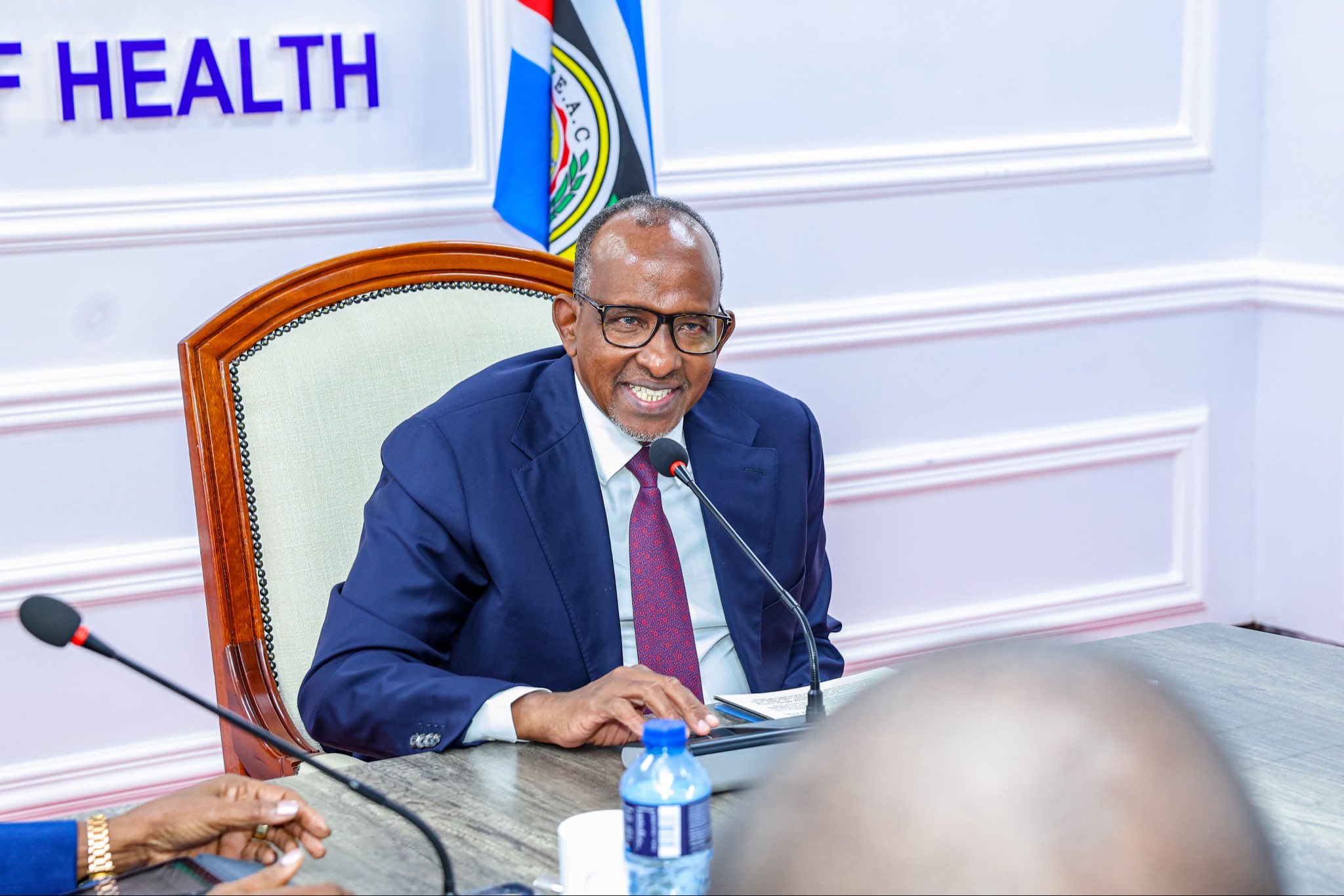
Kenya has managed to reduce malaria cases from 104 to 72 per 1,000 people between 2023 and 2025, Health Cabinet Secretary Aden Duale revealed on Wednesday during a high-level meeting with the African Leaders Malaria Alliance (ALMA).
The gains reflect strengthened oversight and a boost in community-level health services through over 107,000 Community Health Promoters across the country.
Speaking at the session led by ALMA Executive Secretary Joy Phumaphi, Duale highlighted that Kenya’s integrated approach to health services has improved early detection, ensured timely referrals, promoted treatment adherence, and increased the adoption of preventive measures at household level.
“These efforts have improved survival rates for children under five and enhanced maternal health outcomes, particularly in counties with high malaria burden,” he noted.
Under the Kenya Malaria Strategy 2023–2027, the government aims to achieve an 80 per cent reduction in malaria cases, a 90 per cent drop in deaths, and interruption of local transmission in selected areas by 2028.
Despite the progress, national malaria trends remain complex. The World Health Organization reported a 27 per cent rise in total cases in 2025, from 3.29 million in 2024 to 4.18 million, even as targeted interventions helped reduce incidence in other areas. Malaria deaths fell from 1,733 in 2023 to 1,211 in 2024, reflecting improvements in both treatment and prevention.
Regional disparities continue to pose a challenge. The Lake Endemic and coastal zones, including Busia, Migori, and Kisumu counties, carry the heaviest malaria burden. In the Lake Endemic Zone, prevalence is estimated at 15.6 per cent, while children under five and pregnant women remain most vulnerable, with surveys showing up to 22.7 per cent of children affected.
Duale reiterated Kenya’s commitment to sustaining the Zero Malaria Campaign while aligning malaria interventions with the Universal Health Coverage agenda. He proposed deeper collaboration with ALMA, including support for the Reproductive-Age Mortality Survey (RAMOS) to guide data-driven decisions.
He also emphasized the need to expand the Rapid Results Initiative (RRI) to improve planning, budgeting, and accountability for maternal and newborn health, alongside partnerships to mobilize sustainable funding for essential interventions.
“Strengthening data systems, accountability, and sustainable financing remains critical to reducing maternal and newborn morbidity and mortality while advancing towards a malaria-free Africa,” Duale said.
Kenya’s malaria fight is also supported by broader health reforms, including the Digital Superhighway Programme, the Social Health Authority, Practice 360, and the Green Charter, all designed to deliver accessible, efficient, and equitable healthcare.
The meeting brought together top health officials, including Principal Secretary for Public Health and Professional Standards Mary Muthoni, End Malaria Council Advisor Dr Willis Akhwale, Director of Family Health Dr Bashir Issak, and Acting CEO of the Kenya National Public Health Institute Dr Maureen Kamene.